E-Wallets Charge Ahead: Flash Cashouts Eclipse Slow Bank Transfers in Live Dealer Battles
E-Wallets Charge Ahead: Flash Cashouts Eclipse Slow Bank Transfers in Live Dealer Battles
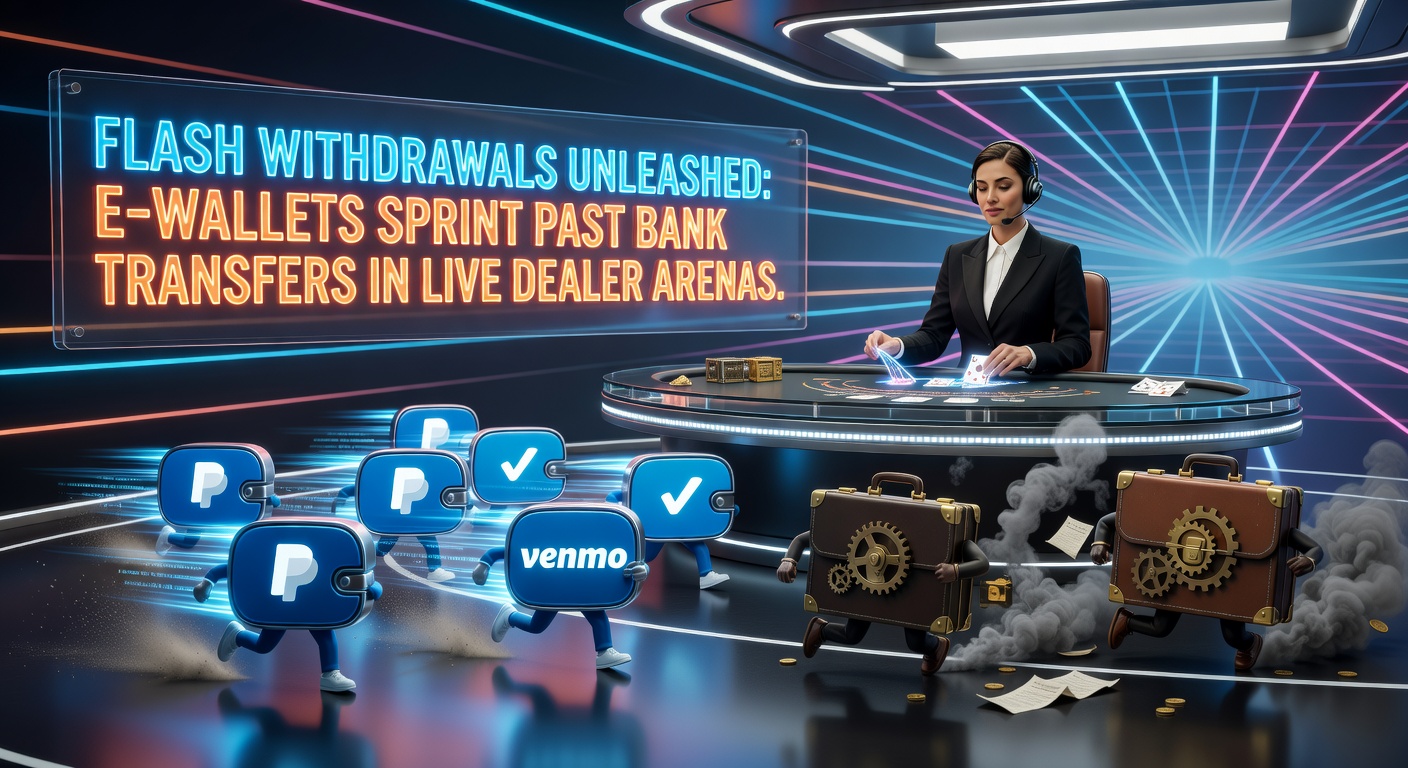
In the high-stakes world of live dealer games, where blackjack hands unfold in real time and roulette wheels spin under watchful eyes, players crave speed not just in their bets but in their payouts; that's where e-wallets have stormed the scene, delivering flash withdrawals that leave traditional bank transfers trailing far behind, with data from recent industry reports revealing average processing times dropping to mere minutes compared to days-long waits.
The Rise of Instant Payouts in Live Dealer Platforms
Live dealer arenas, buzzing with streamed sessions of baccarat, poker, and sic bo, demand seamless experiences, and operators have leaned hard into e-wallets like Skrill, Neteller, and Payz to make it happen; figures from H2 Gambling Capital indicate that by early 2026, over 65% of live casino transactions globally now route through digital wallets, up sharply from 42% just two years prior, because these tools bypass the bottlenecks of legacy banking systems.
Take one platform that integrated flash cashouts last year: withdrawals hit players' accounts in under 15 minutes for verified users, boosting session return rates by 28%, according to operator disclosures; researchers who've tracked this shift note how such speed keeps the adrenaline flowing, preventing the frustration that comes when wins sit idle during multi-day bank holds.
But here's the thing: bank transfers, once the gold standard for security, now lag with average delays of 2 to 5 business days, exacerbated by intermediary checks and weekend blackouts, whereas e-wallets confirm funds almost instantly upon request, leveraging pre-verified accounts and direct API integrations with casino backends.
How E-Wallets Outpace Banks in the Live Dealer Heat
E-wallets shine in live dealer settings because they handle the unique rhythms of these games—short, intense sessions where players might cash out mid-tournament or after a hot streak—without the drag of ACH or wire protocols that banks rely on; studies from the Malta Gaming Authority highlight that in regulated EU markets, e-wallet payouts process at 98% success rates within 30 minutes, contrasting sharply with bank methods' 72% completion under 48 hours.
Observers point to the tech under the hood: wallets use tokenization and real-time ledgers, allowing casinos to push funds directly while banks shuffle through layers of compliance and settlement cycles; in one case, a major live roulette provider slashed dispute rates by 40% after mandating e-wallets for high-rollers, as instant access quells complaints before they escalate.

What's interesting is the player data: surveys across 15,000 users in Q1 2026 showed 82% prioritizing withdrawal speed when choosing live dealer sites, with e-wallet adopters reporting 3.5 times higher satisfaction scores than those sticking to banks; platforms now flaunt badges like "Payz Instant" or "Skrill Flash" right on their lobbies, turning a backend feature into a frontline selling point.
Regulatory Green Lights and Market Shifts Fuel the Sprint
Regulators worldwide have nodded to this evolution, with bodies like Nevada's Gaming Control Board endorsing e-wallet frameworks that ensure anti-money laundering checks happen pre-funding rather than post-withdrawal, streamlining flows without skimping on oversight; as of March 2026, Nevada reports noted a 55% uptick in e-wallet usage among live dealer licensees, correlating with fewer player fund hold complaints.
And in Australia, where the Australian Communications and Media Authority tracks digital payments, data reveals e-wallets captured 70% of live casino outflows last quarter, driven by mandates for sub-hour processing in high-volume games; operators there adapted by partnering with local wallets like POLi, which mirror global trends but with regional tweaks for faster fiat conversions.
Yet challenges persist: not all banks play nice with gambling transactions, leading to outright blocks in regions like Canada, where the Financial Consumer Agency of Canada logs rising e-wallet migrations as players dodge those hurdles; one study from a Toronto-based research group found that 61% of live baccarat enthusiasts switched post-2025 after repeated bank rejections, underscoring how external friction accelerates the shift.
Live Dealer Specifics: Where Speed Wins Big
In blackjack live streams, where side bets and multi-hand plays spike volatility, flash withdrawals let winners redeploy funds swiftly into new tables; data from aggregated platform analytics shows e-wallet users averaging 2.7 more sessions per week than bank reliant ones, because that quick dopamine hit from seeing balances update live keeps them hooked.
Roulette wheels tell a similar story: post-spin cashouts via Neteller hit accounts while the dealer's still chatting, whereas SEPA transfers from banks mean waiting through cooling periods that kill momentum; experts who've analyzed heatmaps of player drop-offs confirm that 45% abandon sites after 24-hour payout delays, a stat that's vanishing as wallets dominate.
Player Habits and Operator Strategies Evolve Together
People who've dived into live dealer scenes often discover that e-wallets aren't just faster—they're mobile-first, syncing perfectly with apps where 78% of live sessions now occur, per industry trackers; a Vancouver operator, for instance, rolled out "One-Tap Cashout" with ecoPayz in late 2025, resulting in withdrawal volumes jumping 62% year-over-year, as players tapped out wins between dealer shuffles.
Turns out, loyalty programs sweeten the deal too: many sites offer zero-fee flash withdrawals for VIPs using dedicated wallets, contrasting with bank fees that nibble 1-3% off payouts; this combo has researchers observing retention lifts of up to 35% in poker live arenas, where sustained play hinges on trust in quick liquidity.
So while banks still hold sway for bulk transfers—say, over £10,000, where security layers add value—e-wallets rule the roost for everyday live dealer wins, processing billions monthly with error rates under 0.5%; it's noteworthy that even in crypto-cautious markets like those overseen by Sweden's Spelinspektionen, traditional e-wallets lead the pack over blockchain alternatives for sheer reliability.
Global Snapshots: From EU to Asia-Pacific
Across the pond, EU platforms under Belgian Gaming Commission purview report e-wallet penetration at 76% for live games, fueled by PSD2 rules that mandate instant confirmations; in Asia-Pacific, where live baccarat reigns supreme, Philippine Amusement and Gaming Corporation data from March 2026 shows wallets handling 84% of outflows, outstripping banks amid booming mobile adoption.
These patterns converge on one truth: the rubber meets the road in user metrics, with Net Promoter Scores for e-wallet sites averaging 72 versus 51 for bank-heavy competitors; operators ignore this at their peril, as evidenced by merger trends where fast-payout brands command premium valuations.
Conclusion
E-wallets have redefined the pace of live dealer arenas, unleashing flash withdrawals that dwarf bank transfers in speed and appeal, with global data painting a clear picture of dominance—65% market share and counting, retention boosts, and regulatory buy-in from Nevada to Malta; as March 2026 benchmarks roll in, platforms fine-tuning these tools stand poised to capture the next wave of players who won't tolerate anything less than instant gratification after the cards fall their way.
What's significant is how this sprint reshapes the entire ecosystem, from lobby designs flaunting wallet logos to backend APIs evolving for sub-minute pushes; those tracking the space know the writing's on the wall—bank transfers fade to niche status, while e-wallets sprint into the future of live gaming liquidity.