26 Aug 2026
Mechanics of Adaptive Loyalty Algorithms Connecting Mobile Slots to Live Tables and Sports Markets
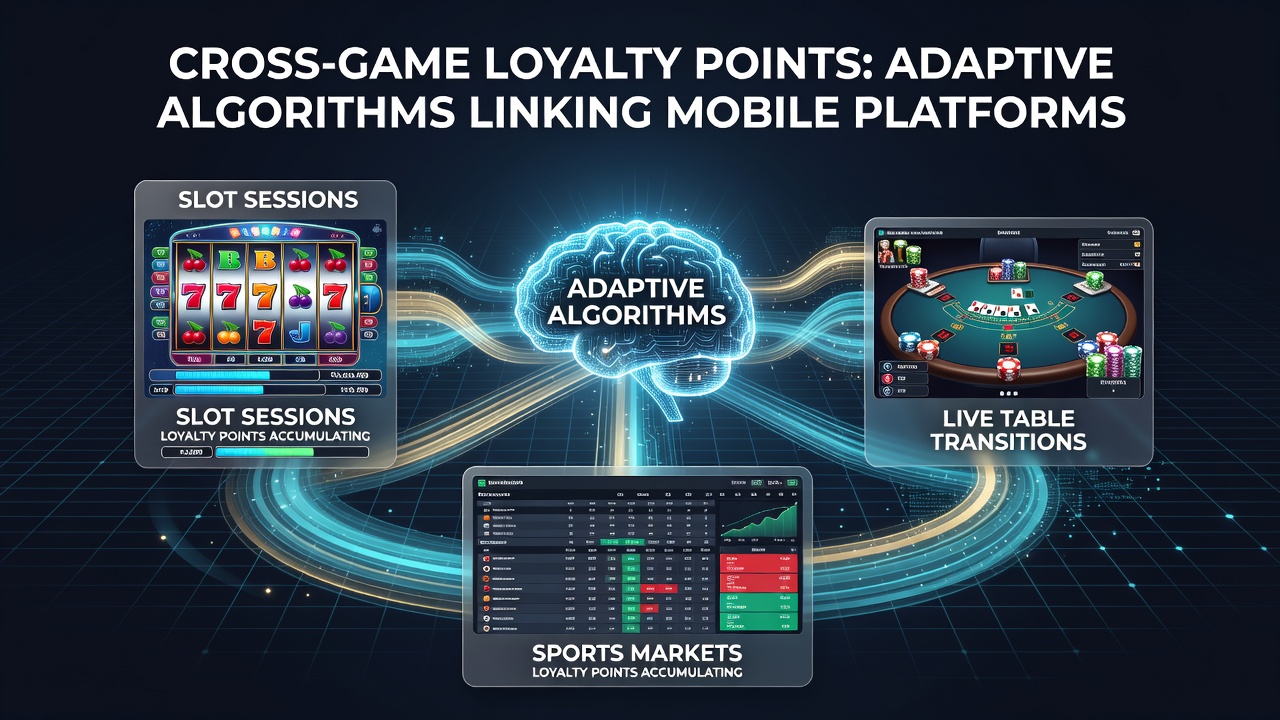
Adaptive algorithms in mobile gaming platforms process player activity across slots, live dealer tables, and sports markets to distribute loyalty points in real time, and these systems rely on machine learning models that adjust reward rates based on session length, bet size, and game type transitions. Operators deploy these algorithms to maintain engagement when users move between verticals, and data pipelines collect inputs from each game category before feeding them into centralized loyalty engines. In August 2026 several major platforms reported updates to their point accrual logic that incorporated additional variables such as time of day and device type.
Core Components of the Algorithms
Developers build these systems around reinforcement learning frameworks that treat each player action as a state transition, and the models receive rewards when users complete cross-game sequences such as finishing a slot session and immediately entering a live roulette table. Feature extraction layers pull metrics including average spin duration, table bet frequency, and sports market selection patterns before passing the vectors to prediction modules that forecast future activity. Observers note that these pipelines often integrate with customer relationship management databases so that historical behavior influences current point multipliers.
Slot to Live Table Transition Logic
When a user exits a slot machine session the algorithm evaluates the total stake volume and session volatility score, then applies a transition bonus if the player opens a live dealer game within a defined window, and the bonus value scales according to how closely the new game matches the risk profile of the previous one. Live table modules send heartbeat signals every few seconds that update the loyalty engine with real-time hand counts and decision speeds, allowing the system to recalculate points mid-round. Researchers at institutions studying digital entertainment have documented similar state-tracking methods in peer-reviewed work on sequential decision systems.
Integration with Sports Markets
Sports betting data streams feed into the same loyalty models through dedicated APIs that tag wagers by market type and odds movement, and the algorithm compares these events against casino game patterns to determine whether a user receives an accelerated point rate for combining pre-match bets with in-play table sessions. Mobile platforms record location signals and notification response times to refine the weighting applied to sports activity, and this cross-referencing helps operators identify segments that respond to bundled rewards. A Nevada Gaming Control Board industry report from early 2026 highlighted rising adoption of unified player tracking across verticals in regulated markets.

Mobile Platform Specifics
Smartphone applications push the adaptive calculations to edge servers that minimize latency during rapid game switches, and these servers cache partial player profiles so that point updates appear instantly even on variable network connections. Battery and data usage constraints force developers to compress feature vectors before transmission, and the algorithms therefore prioritize lightweight models that still capture essential behavioral signals. Device fingerprinting combines with account-level data to prevent point farming across multiple instances, and platform operators run periodic audits that compare algorithmic outputs against regulatory reporting requirements.
Data Sources and Model Training
Training datasets aggregate anonymized session logs spanning millions of transitions, and data scientists apply clustering techniques to identify common movement patterns between slots and sports before labeling those clusters for supervised fine-tuning. External benchmarks from the Australian Communications and Media Authority provide comparative statistics on player retention metrics that help validate model performance in different regulatory environments. Continuous learning loops retrain the algorithms weekly using fresh transition data while holding out test sets to measure drift.
Conclusion
Adaptive loyalty algorithms now form a central layer in mobile gaming infrastructure by synchronizing point awards across slots, live tables, and sports markets through shared behavioral signals and real-time processing. The technical approach relies on reinforcement learning, feature compression, and cross-vertical data pipelines that operators refine according to performance metrics and regulatory expectations. As platforms continue to expand these systems, the underlying models will incorporate additional inputs such as session timing and device context to maintain consistent reward distribution.