UK's Remote Gaming Duty Jumps to 40% in April 2026: Smaller Casino Operators Face Mounting Pressures from Stricter Regulations
UK's Remote Gaming Duty Jumps to 40% in April 2026: Smaller Casino Operators Face Mounting Pressures from Stricter Regulations

The Regulatory Shift Hitting the UK Gambling Sector
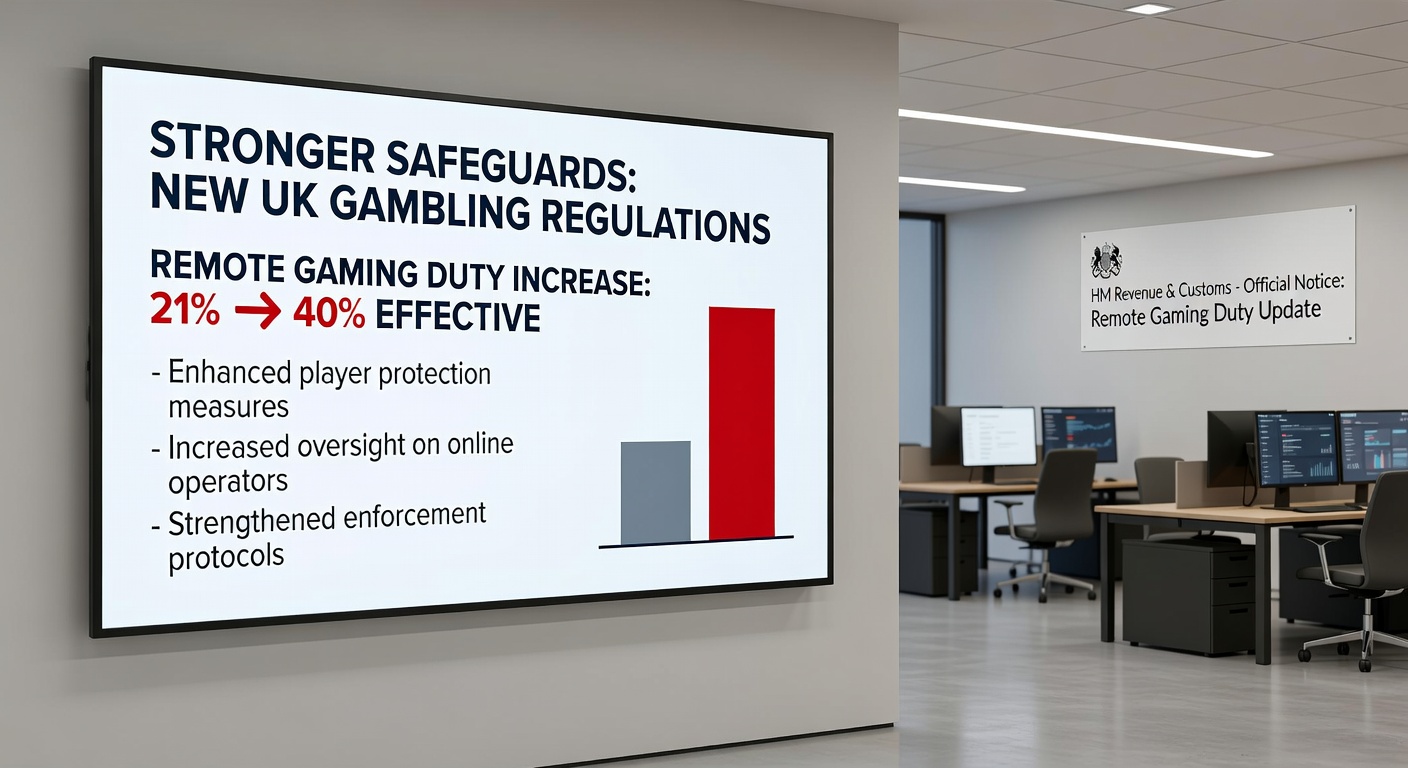
Stricter gambling regulations in the UK, including a significant hike in the Remote Gaming Duty from 21% to 40% set for April 2026, are reshaping the casino landscape; smaller operators, in particular, grapple with elevated compliance costs tied to affordability checks, marketing curbs, and tougher anti-money laundering measures, while larger firms leverage deeper pockets to adapt. Data from industry analyses reveals how these changes, overseen by the UK Gambling Commission, prioritize player protection but risk sidelining independents. Observers note that the duty increase alone could strain revenues, yet it's the layered compliance demands that amplify the burden for those without vast resources.
But here's the thing: the Remote Gaming Duty targets online gambling activities, so remote casino operators bear the brunt as tax bills balloon on gross profits; according to government outlines on changes to gambling duties, this adjustment aligns with broader fiscal goals, although smaller players argue it tips the scales toward consolidation. Take one mid-sized online casino group that recently flagged in reports how their projected tax liability could surge by over 90% post-hike, forcing cutbacks in operations just to stay afloat.
How Compliance Costs Are Pinching Smaller Operators
Affordability checks form a core pillar of the new rules, requiring operators to assess customer spending limits through financial data verification; this process, while aimed at curbing problem gambling, demands sophisticated software and staff training that smaller firms can't easily afford, leading to delays in customer onboarding and lost revenue. Marketing restrictions compound the issue, banning bonuses for new players and slashing ad spend allowances, so independents who relied on targeted campaigns to compete now find their customer acquisition costs skyrocketing without the budgets of giants like Entain or Flutter.
And then there's anti-money laundering (AML) enforcement, ramped up with mandatory enhanced due diligence on high rollers; experts who've tracked the sector point out that smaller operators often outsource these functions at premium rates, whereas big players build in-house teams, creating a resource chasm. Figures from a recent Pound Sterling Live analysis indicate that compliance expenses for small operators have already jumped 25-30% year-over-year, with projections showing further escalation by March 2026 as firms prep for the duty shift.
What's interesting is how these layers interact: a small remote casino might spend thousands weekly on AML software alone, diverting funds from game development or customer service, and that's before the tax hike guts their margins. People in the industry often share stories of operators like a certain Scottish-based online platform that shuttered secondary sites last quarter, citing regulatory prep costs as the tipping point; such cases highlight the real-world fallout, where adaptability hinges on scale.
Disproportionate Effects and the Path to Market Consolidation
Smaller casino operators lack the economies of scale that shield larger ones, so while behemoths absorb compliance via centralized systems and lobby for tweaks, independents face existential threats; research into the sector shows that firms with under 50 employees report compliance as their top cost driver, outpacing even staff wages in some breakdowns. This disparity fuels predictions of widespread closures, with analysts estimating up to 15-20% of small remote operators could exit by 2027, handing market share to the top five players who already dominate 70% of online gambling.
Turns out, consolidation isn't just a buzzword here: mergers have ticked up 12% in the past year, often with smaller outfits folding into larger portfolios to share compliance infrastructure; one notable deal involved a niche slots provider merging with a mid-tier group, explicitly to pool AML resources ahead of 2026. Observers who've studied these patterns note that player protection goals, though laudable, inadvertently accelerate this squeeze, as regulators push forward without tailored relief for independents.
Yet the timeline adds urgency: by March 2026, operators must finalize system upgrades for affordability checks and duty calculations, a scramble that favors those with tech partners already in place; smaller players, scrambling for loans or partnerships, often find the ball's in their court but with fewer options. Data indicates that rural or regionally focused casinos, hit hardest by marketing bans, project revenue drops of 18-22% pre-tax hike, underscoring how regulations ripple through operations.
The UK Gambling Commission's Oversight and Player Protection Focus
The UK Gambling Commission steers these reforms through license conditions and guidance, enforcing affordability via frictionless friction—think pop-up spending quizzes tied to bank data—while AML rules mandate transaction monitoring that flags anomalies in real time. Studies commissioned by the body reveal that problem gambling rates hover at 0.5% among online players, yet regulators justify the overhaul by citing £1.2 billion in annual gross gambling yield vulnerable to abuse.
So compliance isn't optional: non-adherence risks fines up to 10% of revenue or license revocation, a sword hanging heavier over small operators who've seen peers penalized for lax checks; one case saw a minor operator fined £150,000 last summer for inadequate AML, a sum that nearly bankrupted them. But here's where it gets interesting—the Commission has rolled out sandbox programs for testing compliance tech, though uptake remains low among independents due to participation fees and time sinks.
Those who've followed the Commission's triennial reviews know these changes stem from the 2022 Gambling Act consultations, balancing fiscal revenue—projected to rise £3 billion yearly from duties—with harm reduction; smaller operators petition for phased implementation, but approvals lag as priorities tilt toward enforcement.
Timeline Pressures and Preparations Leading into 2026
March 2026 looms as a pivotal month, with operators required to submit pre-compliance audits and update tax systems ahead of the April duty leap; this window, just 30 days, tests readiness, as delays could trigger penalties amid peak spring betting seasons. Larger firms roll out beta tests now, integrating AI for affordability modeling, while smaller ones crowdsource solutions or delay launches.
And the numbers paint a stark picture: post-hike modeling shows a typical small operator's effective tax rate climbing from 28% to 48% when layered with point-of-consumption levies, eroding viability unless player volumes surge—an unlikely bet under marketing clamps. Experts observe that hybrid land-based/remote casinos fare slightly better, blending revenues, but pure online independents face the rawest edge.
Now, with closures already dotting the landscape—like three small platforms that folded in Q4 2025— the sector braces for acceleration; those digging into filings see capex on compliance doubling for survivors, a sign that adaptation, though costly, beats extinction.
Conclusion
The Remote Gaming Duty's climb to 40% in April 2026, woven with affordability, marketing, and AML mandates, spotlights a harsh reality for UK smaller casino operators: survival demands resources they often lack, paving the way for consolidation under the UK Gambling Commission's watchful eye. Data underscores the tilt toward big players, with independents navigating closures or mergers to endure; as March 2026 approaches, the industry's shape hangs in the balance, player protection secured at the cost of diversity. Observers track how these shifts unfold, revealing whether tweaks emerge to soften the blow or if the writing's on the wall for the little guys.